Team India wins four of seven awards at International Space Games in Moscow
Three students from Andhra Pradesh, part of an IIT Madras-led squad, helped India post the highest award tally at a simulated Mars mission staged by HSE University.
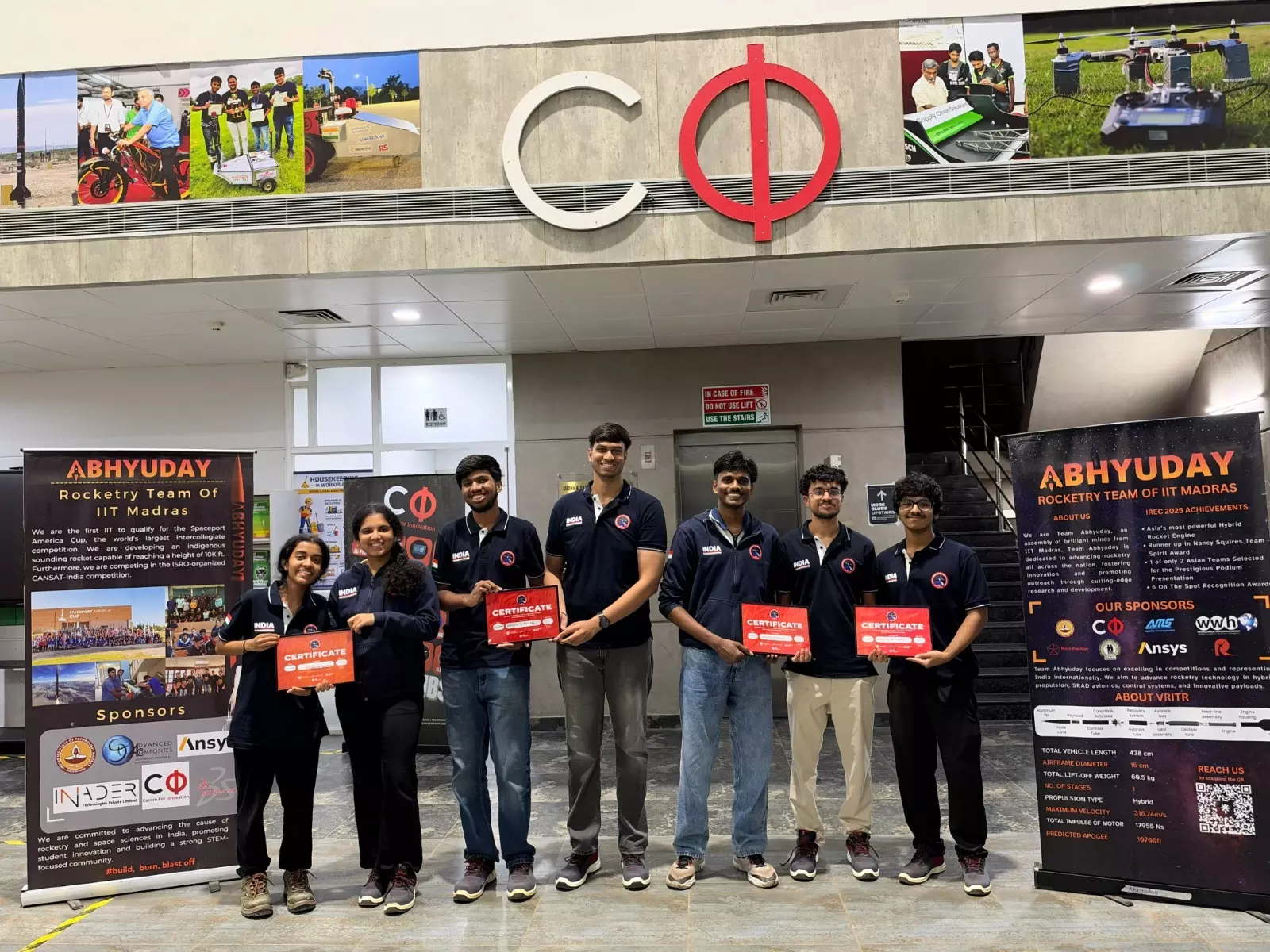
India won four of the seven major awards at the International Space Games 2026 in Moscow, the highest tally among participating nations, with three students from Andhra Pradesh playing central roles. The competition ran from October 26 to November 1 at the Skolkovo Innovation Centre.
Seven members of Team Abhyuday, the student rocketry team of IIT Madras, represented the country. The event was organised by HSE University under the National Technological Olympiad and drew teams from BRICS, SCO and CIS nations for a five-day simulated space mission.
The exercise was built around a Mars expedition, with a crew inside a simulated station in Moscow, a Mission Control Centre coordinating operations, and a ground team in India providing support. The three Andhra Pradesh students were Sai Praneeth from Kadapa, Kadiyala Sai Pravallika from Visakhapatnam and Shanmuk Daggumalli from Guntur.
Pravallika was part of the crew inside the station, operating the rover and drone. Praneeth worked at Mission Control as communications operator. Daggumalli was one of five students at the Earth Laboratory at IIT Roorkee, which acted as a ground station, analysing scientific data, designing tools for the rover and preparing procedures for the crew.
The design of the exercise placed a premium on discipline rather than speed. Praneeth said the ground team could speak to the crew only through Mission Control and in time slots set by the organisers, so messages had to be prioritised and unambiguous, and some questions waited for the next window. Pravallika described it as a full simulated mission, unlike a usual engineering contest, with little time to resolve problems as they arose.
India took the awards for best communication specialist, best MCC shift supervisor, best MCC operator and best researcher, along with a special certificate of recognition for overall performance. Praneeth won Best MCC Operator, and Pravallika received a Certificate of Appreciation for her rover and drone work. The remaining awards went to participants from IIT Bombay, Delhi University and IIT Roorkee, and the Earth Laboratory team was commended for research, communication and documentation.
The result is notable for what it rewards: coordination across distance, delayed communication and shared procedures, skills that matter in real space operations. Team Abhyuday, which works under IIT Madras' Centre for Innovation, was the first IIT team to qualify for the Spaceport America Cup and is developing an indigenous sounding rocket intended to exceed 10,000 feet. Source: Deccan Chronicle.