Dhami announces 'Baini-Bhuli' aid for 5 lakh+ Uttarakhand women
The Chief Minister said the first instalment would arrive in December, roughly a year before the state votes in 2027, a timetable that gives the scheme obvious political weight.
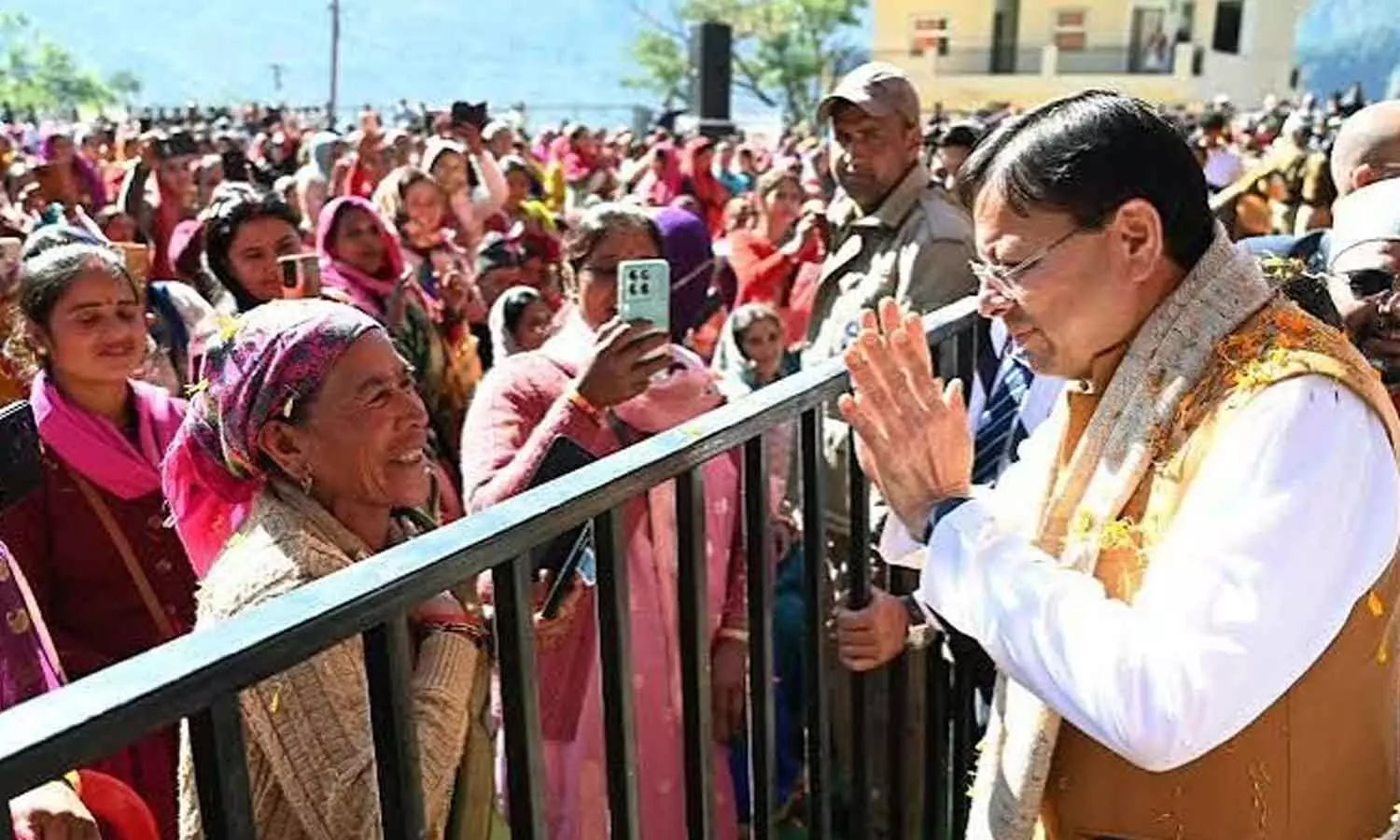
Uttarakhand Chief Minister Pushkar Singh Dhami on Tuesday announced financial assistance for more than five lakh women under the 'Baini-Bhuli' scheme. The first instalment is due in December, ahead of the 2027 assembly elections. He spoke at a 'Matrushakti Sammelan' in Pipalkoti, in Chamoli district.
Dhami said the money would go straight into beneficiaries' bank accounts in two instalments. The source report does not give the amount per woman, the eligibility criteria or the total cost to the state exchequer. Those details will decide whether the scheme is a modest top-up or a significant fiscal commitment.
The pitch was framed around women's role in the hill economy. Dhami said they are central to the state's social, cultural and economic progress, contributing through agriculture, animal husbandry, environmental conservation and the rural economy. He added that the government is widening livelihood options through self-help groups, self-employment schemes and the promotion of local products.
The venue was chosen with some care. Chamoli is the birthplace of the Chipko Movement, and Dhami invoked Gaura Devi and the women who hugged trees to stop felling, saying their conservation message still inspires the world. Few political backdrops carry as much moral capital in Uttarakhand as that one.
He also credited central programmes launched under Prime Minister Narendra Modi, naming the Ujjwala Yojana, Jan Dhan Yojana and Direct Benefit Transfer, for improving women's lives. The reference places Baini-Bhuli within a familiar template: a cash transfer routed through bank accounts, built on the Jan Dhan and DBT infrastructure that has become a staple of Indian welfare politics.
The policy question is the one that follows most such schemes: whether direct transfers are a lasting support for rural livelihoods or a pre-election sweetener. With a December payout and polls about a year later, the timing invites the second reading, though the government will argue the first. Details of the rollout, and how beneficiaries will be identified, will be the real test.