Bangladesh's Rooppur Plant Sends First Nuclear Power Onto National Grid
Unit 1 of the Russian-built Rooppur plant is now feeding electricity into Bangladesh's grid, making the country a nuclear power producer for the first time.
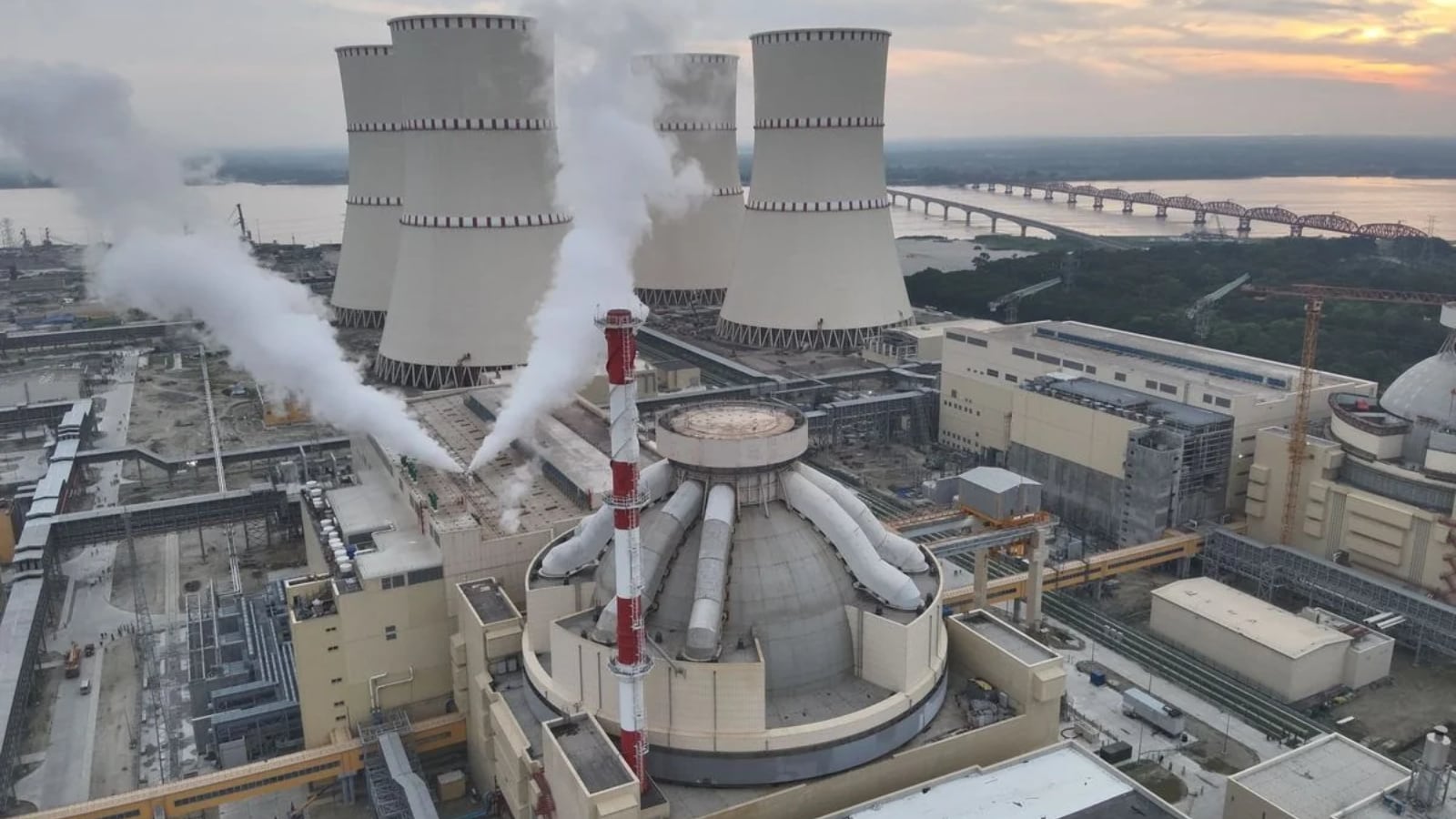
Bangladesh has crossed a line it has never crossed before. Electricity from a working nuclear reactor is now flowing into the national grid, after Unit 1 of the Rooppur Nuclear Power Plant was synchronised with the system and delivered its first nuclear-generated power. That puts the country in a small club of nations that light homes and factories with atomic energy.
The plant sits about 160 kilometres from Dhaka, close enough to the capital that its output will be felt in everyday life. Rooppur is also near the Indian border, less than 50 kilometres away. Its two reactors are Russian-designed VVER-1200 units, each rated at 1,200 MW, for a combined capacity of 2,400 MW. Once both are running, Rooppur will be the largest nuclear station in South Asia by unit size.
The grid connection follows a milestone just a month earlier. On October 11, the reactor reached first criticality, the point where a self-sustaining chain reaction starts in the core. Engineers then raised power in steps. During synchronisation, the turbine generator produced roughly 370 MW, with the reactor operating at about 40 per cent of its rated power. Commercial operation has not started yet, and the team will keep increasing output in stages before handing the plant over for full service.
The scale of the project explains why this moment matters. Russia's state nuclear company Rosatom is building the plant under a general contract signed in December 2015, and the groundwork goes back to a 2011 intergovernmental nuclear cooperation agreement. The estimated cost is about $12.65 billion, one of the largest infrastructure bets in the country's history. Construction of Unit 1 began in November 2017, and Unit 2 followed in July 2018.
The technology is the other big story. Bangladesh became an independent nation only in 1971, yet it is entering nuclear power with a Generation III+ design rather than older reactor models. The VVER-1200 includes double containment, passive heat removal and a core catcher meant to handle severe accidents. For a country that is still expanding its power supply, that is a notable leap.
India's Kudankulam plant in Tamil Nadu offers a useful comparison. Its six units use the earlier VVER-1000 design. Kudankulam is widely regarded as one of India's safest and most reliable stations, but the newer VVER-1200 adds safety features shaped by lessons from accidents such as Fukushima. For Bangladesh, that means a modern reactor at the start of its nuclear journey rather than years of catching up.
For ordinary readers, the immediate question is what changes at home. Nuclear power runs steadily around the clock, unlike solar or wind, so it can add dependable capacity to a grid that has often struggled to meet demand. Once both units are online, the plant could ease pressure on fuel imports and reshape how the country plans its energy future. The first electrons are on the grid, and the next few months will show how quickly that power reaches the people who need it.